Landing pages, by the batch
Pick a finished template off the shelf, or order a run built to your niche, your GEO and the distance you need between units.
How it works
Choose the shelf or the order
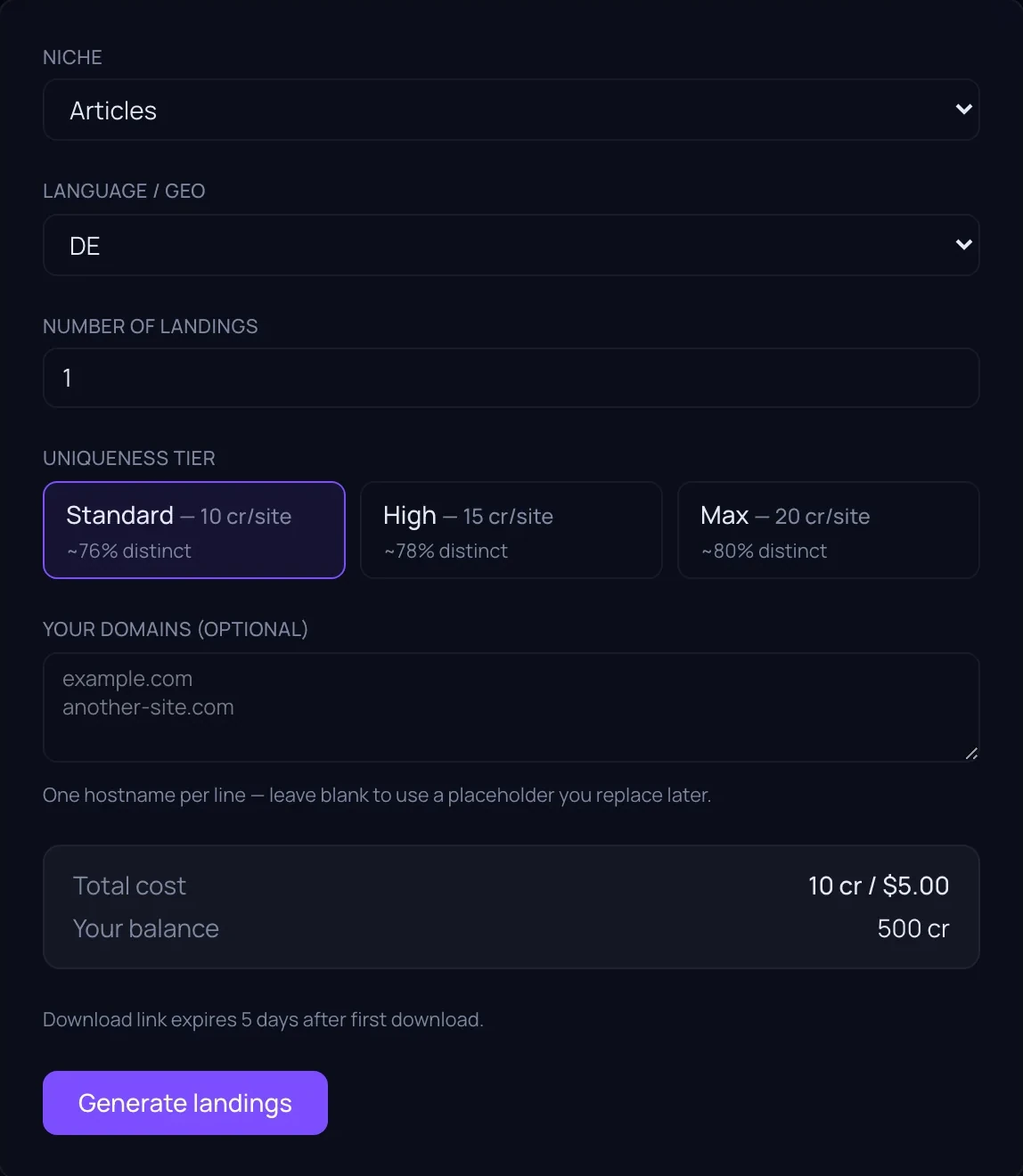
The catalog holds finished templates you can look at before spending anything. An order instead takes a niche, a GEO, a count and a uniqueness tier, and builds a run to those.
The run is assembled, not written
Every unit draws from a content bank prepared ahead of time for that niche and language, and varies its layout, palette, typefaces and logo. Nothing calls a model while your order is running.
You get a ZIP of static HTML
No build step, no runtime, no account required to open it. Upload it wherever you host and point a domain at it.
What a credit buys
- 144 niche-and-GEO combinations across 16 niches, written in the language of the GEO
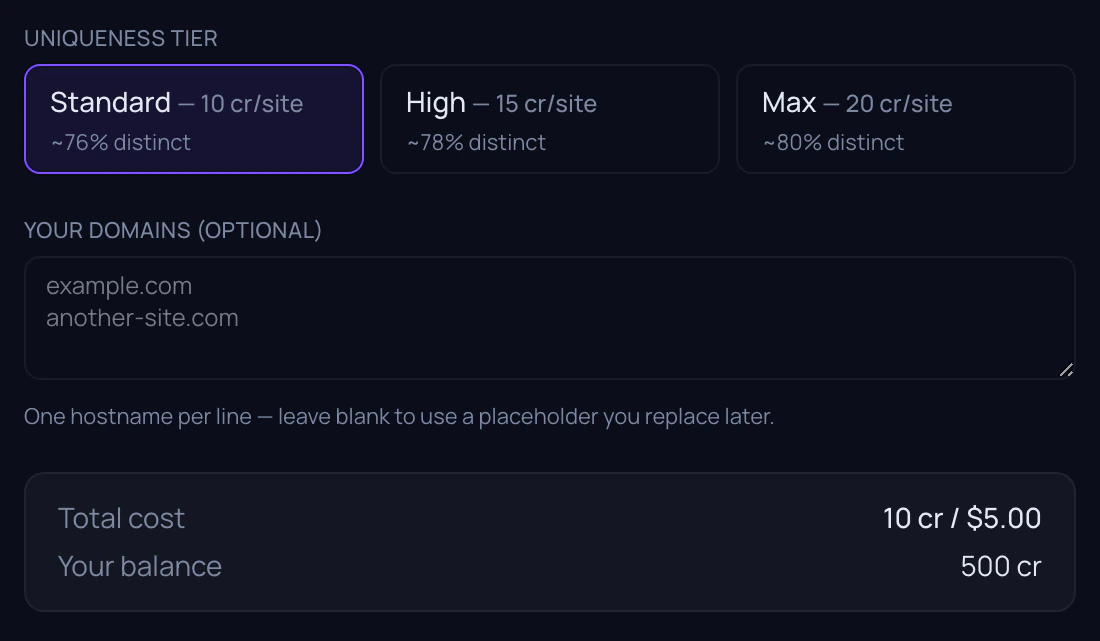
- Three uniqueness tiers: 10 credits a landing at standard, 15 at high, 20 at max, and a credit is $0.50
- Batches of up to 20 units at standard, 16 at high and 10 at max — if a run comes back short, the difference returns as credits
- An ordered batch stays downloadable for five days from the first download; a template bought from the catalog, for seven
What it is not
- Not hosting. The output is a file — your server, your DNS, your certificate.
- Not a tracked landing. Buying or generating one connects nothing to the monitoring side of the product; it is a page, not an account.
- Not a claim that no model was involved anywhere: the order-time assembly is deterministic, but the photo pools behind the niches were produced with image generation.
How it is paid for
Credits sit beside the subscription rather than inside it — you top them up when you need a run, and they do not expire with the billing month. A plan buys capacity for accounts and people; a credit buys a landing.