One brand, several buyers, one number that matters
In-house teams rarely have an account-count problem. They have an attribution-and-accountability problem: who moved what, when, and did it help.
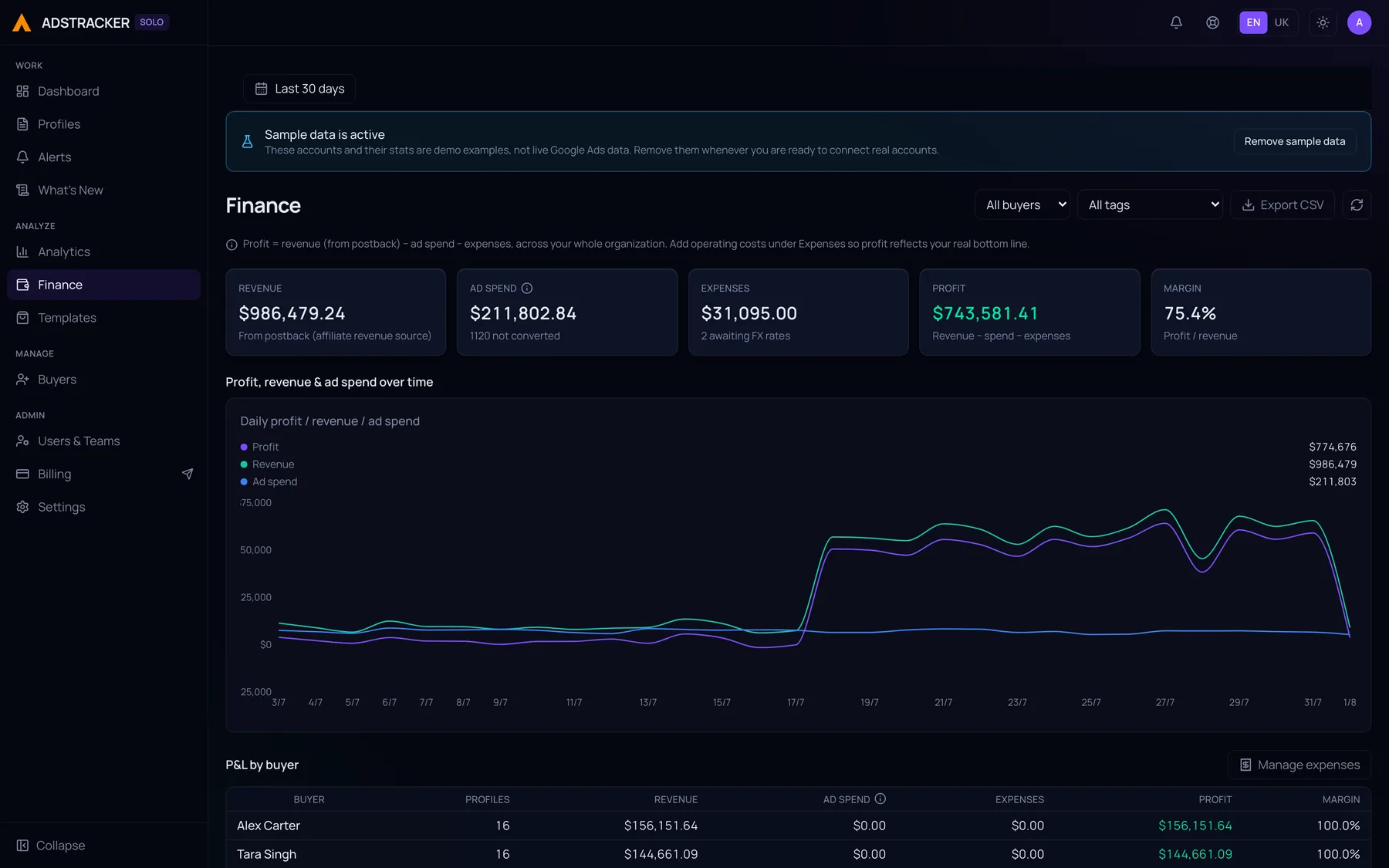
What breaks today: Finance asks what a channel actually returned and the answer takes two days of spreadsheet work.
How AdsTracker answers it: Spend, revenue and ROAS live in the same operational view, so the channel question has a standing answer instead of a reporting project.
What breaks today: Buyers each keep their own view of performance, so nobody agrees on which campaigns are the winners.
How AdsTracker answers it: Everyone works from the same data, with per-buyer performance visible to the lead without asking anyone for a screenshot.
What breaks today: Policy limitations and disapprovals sit unnoticed in accounts, quietly capping reach.
How AdsTracker answers it: Approvals and limitations are tracked as first-class signals, not something you find when you go looking.
What breaks today: Nobody can see whether last week’s change helped, because there is no shared before-and-after.
How AdsTracker answers it: Health, spend and outcome are tracked continuously per account, so a change has a visible before and after.
Who this is for
In-house performance teams running Google Ads for a single brand or product line, usually with two to ten buyers and a finance stakeholder asking hard questions.